
Shamanic Journeys
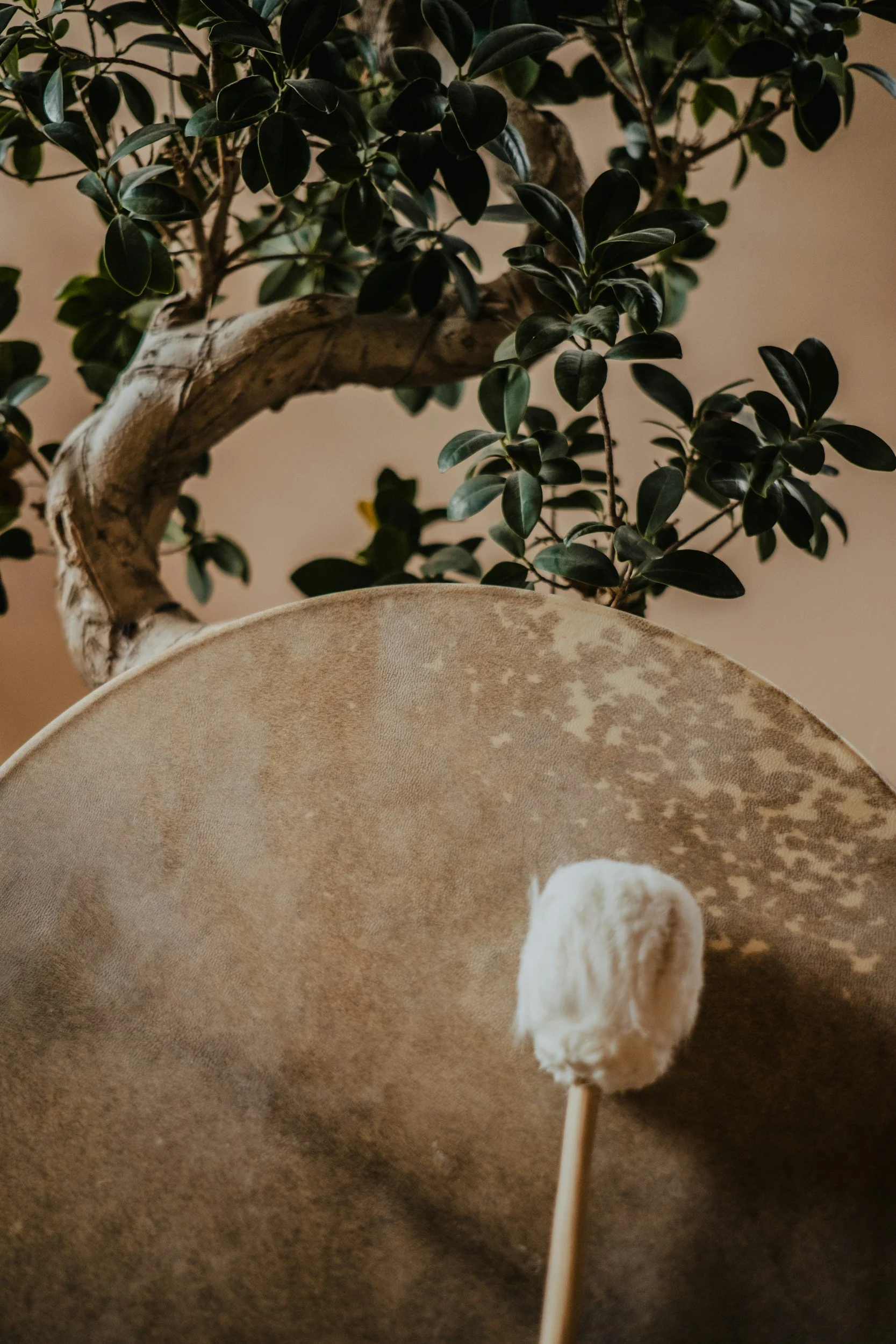
Shamanic journeys are guided meditative and ceremonial practices used across cultures for thousands of years. They draw on steady rhythmic sound, most often the drum or rattle, along with breath, presence, and ritual to gently draw the mind out of ordinary waking awareness into a softer, more spacious state. In this state, imagery, memory, and insight can move more freely, and things that have been held in the body or mind for a long time can begin to loosen.
At The Bridge, this work is held in the tradition of the Andean shamans, drawing on Teresa's 600 hours of training with the Four Winds Society under Alberto Villoldo. The practices are ancient, but the intention behind them is simple: to make space for what a person is carrying, and to help move what is ready to move. Teresa offers a range of these practices, from private sessions to seasonal group ceremonies.
What to expect
You are welcomed into a quiet, prepared space. Sessions begin with a brief conversation to understand what you are working with and what you hope to move. Depending on the practice, you may lie down for a drum-guided journey, sit in circle for a ceremony, or work with breath and voice alongside Teresa. Some sessions include the making of a despacho, a traditional Andean offering of flowers, seeds, and symbolic items arranged with intention and then given to the fire or earth as a prayer.
Sessions typically last between 60 minutes and two hours, with time afterward to talk about what came up and how to integrate it. Some focus on releasing what is no longer needed. Some on marking a transition, an ending, or a season.
Who it’s for
Anyone willing to sit with the practice as it is. People come to shamanic work for many reasons. Some are moving through grief, illness, or a life transition. Some are drawn to it after years of therapy, meditation, or other practices have taken them as far as they can go. Some come simply out of curiosity and a sense that something in them is asking to be met.
You do not need prior experience with meditation, yoga, or spiritual traditions. You do not need to identify with any particular belief system. Shamanic work is not a substitute for medical or mental health care, but it can sit alongside them beautifully.
*The Bridge and its teachers are not licensed medical professionals or mental health counselors. Shamanic practices are offered as ceremonial and spiritual support only and are not a substitute for medical or mental health care.